
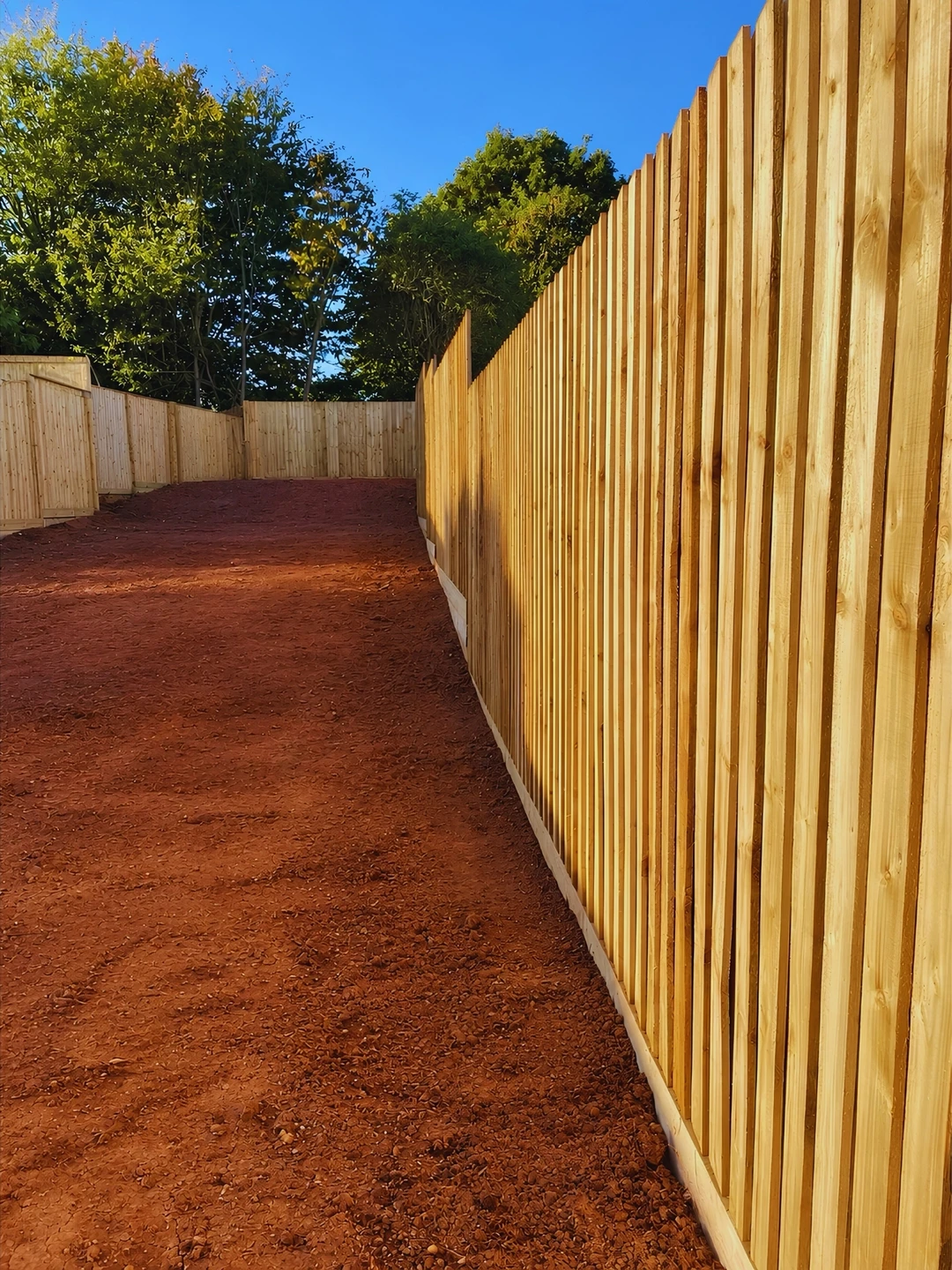
Fencing & Gates
Fencing and gates across Devon, with posts set properly and timber that stands up to weather coming off the moor.
Fencing and gates across Devon, with posts set properly and timber that stands up to weather coming off the moor.
Where it goes wrong
Fences fail in one place
Walk past any tired fence and look at the bottom of the posts. That is where it went. Not the panels, not the fixings. The few inches of post at ground level where wet soil meets timber.
Everything above can be in perfect condition and the fence still leans, because the only part carrying real load has softened.
A fence is mostly a groundwork job. What you see is panels. What you are paying for is what holds them up.
Worth knowing
How tall can I go?
Generally two metres, or one metre alongside a road or footpath. Individual properties can have restrictions, so we check yours before work starts.
Whose fence is it?
Check your deeds before replacing a boundary. It may not be yours.
What makes one last?
Pressure treated timber, posts set to drain, and a gravel board.
Timber
Pressure treated, not dipped
Dip treated
The timber is passed through a bath of preservative that coats the surface and penetrates barely at all. Cut into it and the inside is bare wood. It is what most cheap fencing is, and it is why cheap fencing looks tired in four or five years.
Pressure treated
The timber goes into a sealed vessel and preservative is forced deep into the grain under pressure. It costs more per panel. It is what we fit as standard, because the treatment is the part you cannot add later.
Wind
A fence is a sail
The force does not stop at the panel.
Wind meets the solid face. The rails and the posts have to carry that push down into the ground.
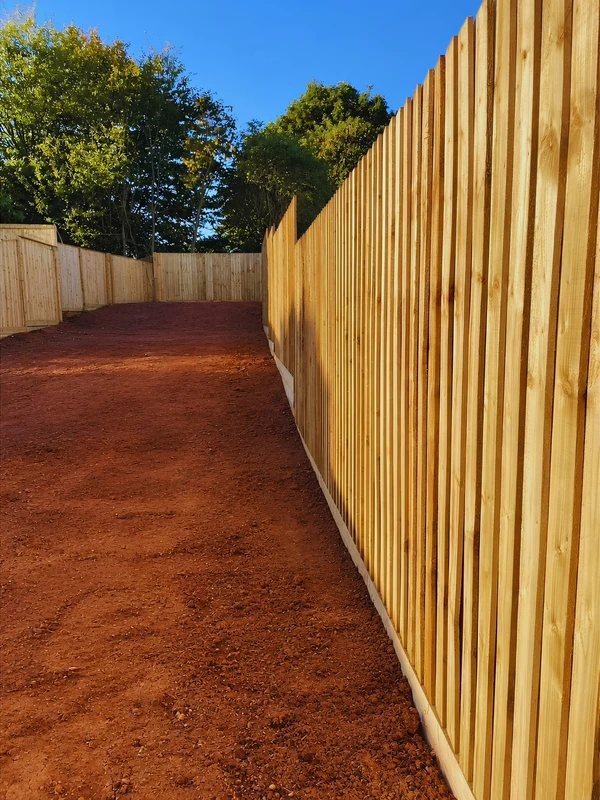
This matters more here than in most of the country. We get weather off the moor and off the Atlantic, and a tall close board fence presents a flat face to all of it.
Wind does not go round a solid fence. It goes over, and it pushes hard on the way.
That is why the fences that come down in a gale are almost always the tall solid ones, and why they usually come down as a whole run rather than a panel.
Slatted and hit and miss fencing lets air through. It costs more per metre and it stays up. On an exposed boundary it is not a style choice, it is the reason the fence is still there next winter.
Posts
Set to drain, not set in a bucket
The load the wind puts into a fence has to end somewhere, and it ends in the few inches of post at ground level. That is where tired fences went, and it is almost always water that put them there.
The last few inches decide it.
Everything above can be in perfect condition and the fence still leans. Compare a post set to drain with one set in a bucket.
Concrete posts sidestep the problem entirely, at some cost to how the fence looks. Timber posts look better and have to be done properly. We will tell you which we would use on your fence and why.
Gravel boards
Keeping the panel off the ground
A gravel board is a sacrificial strip along the bottom of the fence, sitting between the panel and the wet ground.
The point is that rot attacks the board instead of the panel. A board is cheap and takes minutes to swap. A panel is neither. Concrete gravel boards take it further and do not rot at all.
It is a small detail that decides whether you are replacing a strip in ten years or the whole fence.
Gates
Gates are heavier than they look
A gate hangs. Every part of it is under load all day from two or three hinges, and every time someone leans on it or the wind catches it, that load goes into the post.
So gate posts are a different job to fence posts. Bigger section, set deeper, more concrete.
A gate post that shifts half an inch is a gate that drags on the ground, then catches, then eventually will not close.
Field gates, side gates, driveway gates and matching gates built into a run of fencing.
The rules
Height and boundaries
Two things worth knowing before you plan anything.
Height. Two metres is generally the limit without planning permission, dropping to one metre where the fence runs alongside a road or footpath. Individual properties can have restrictions, so we check yours before work starts.
Ownership. It is worth checking your deeds before replacing a boundary fence, because it may not be yours to replace.
Neighbours tend to take it better when they are asked first, and it costs nothing to look.
What it costs
No price list, and here is why
Fencing prices turn on things you cannot see from a photograph. What the ground is like where the posts go.
Whether there is an old fence and old concrete to dig out. How exposed the boundary is, and whether that changes what should go up.
So we come and look, at no charge and with no obligation. You get a written quote with the work set out and a price that does not move.
Want a price for your garden?
We come out, look at the space and give you a written quote. No charge and no obligation.
Peace of mind
Guaranteed work
Our workmanship is guaranteed, with the terms set out in writing in your quote before anything starts. Materials carry their own manufacturer guarantees and we pass those on to you in full.
More of what we do
Our other services
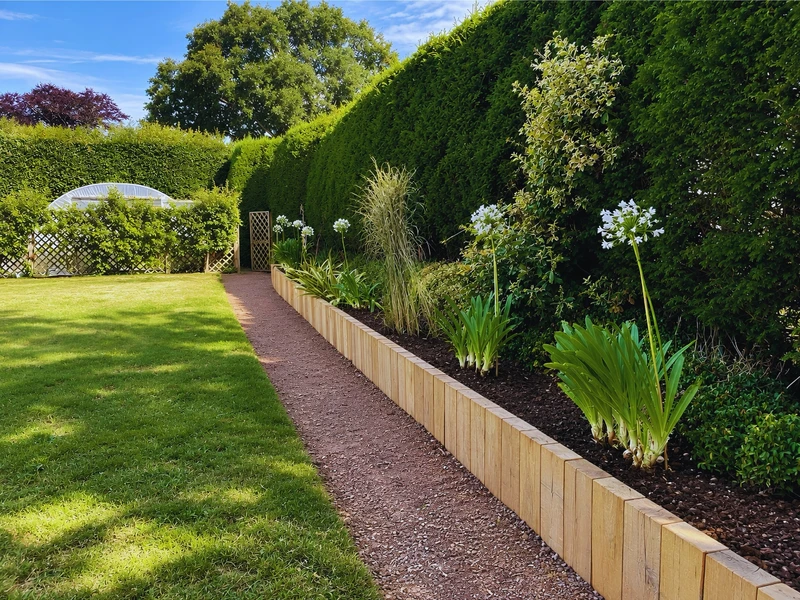
Garden Design & Landscaping
A plan first, then the whole build, so the finished garden holds together as one piece of work.
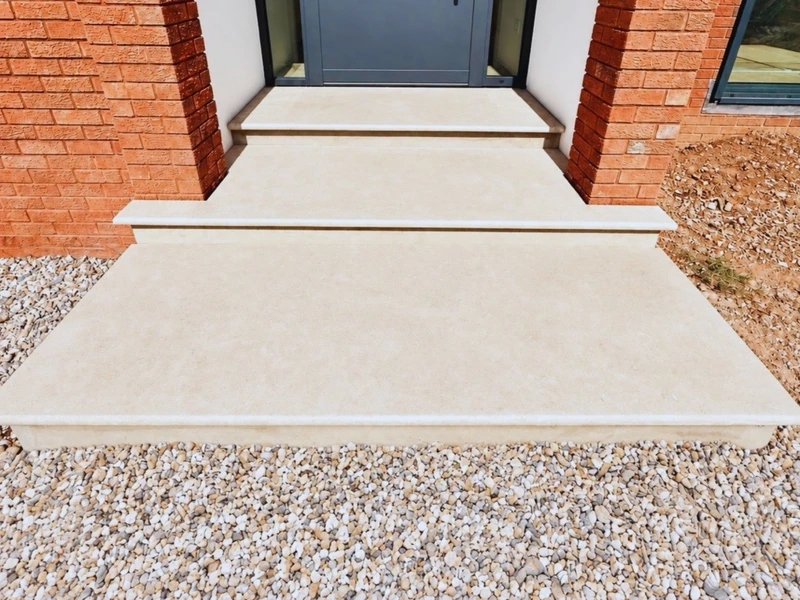
Patios & Paving
Laid on proper foundations with the falls right, so it drains and it stays flat.
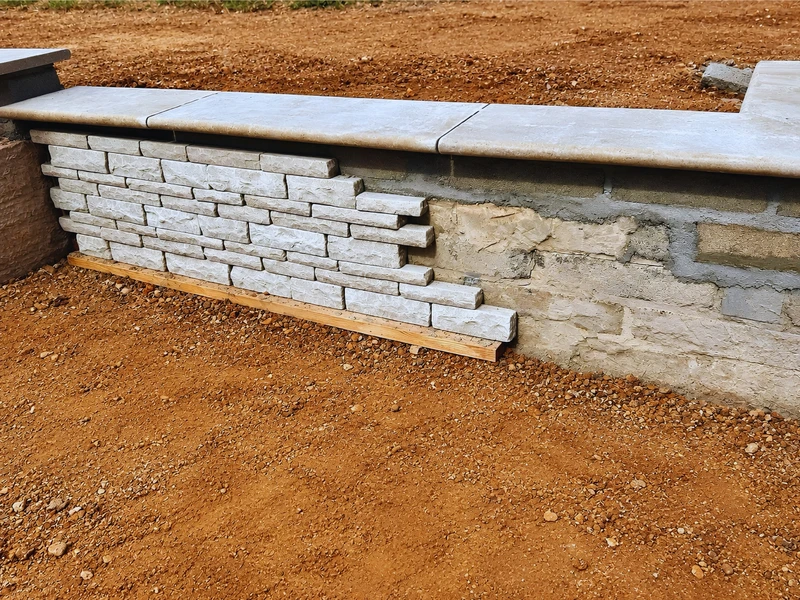
Stonework & Walls
Retaining walls, raised beds and steps, built in stone that suits the house.
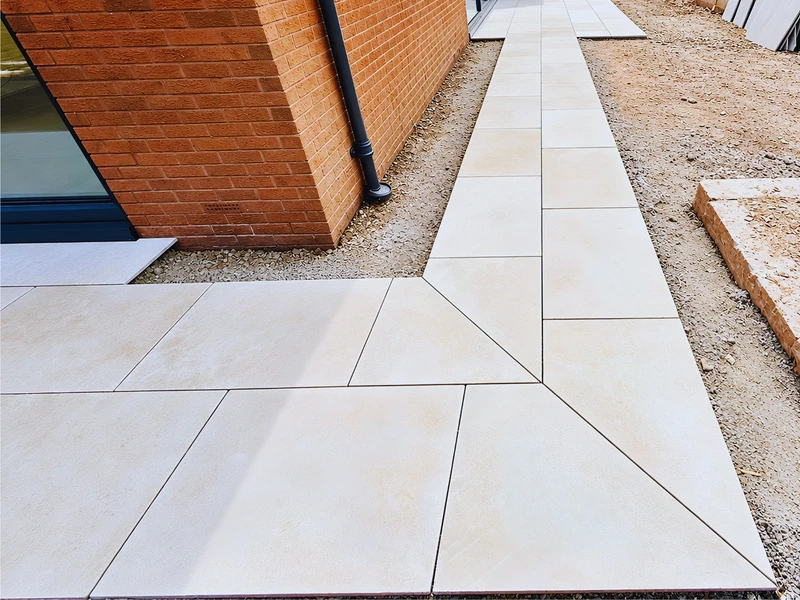
Driveways & Paths
Solid ground underneath and a surface that copes with a Devon winter.
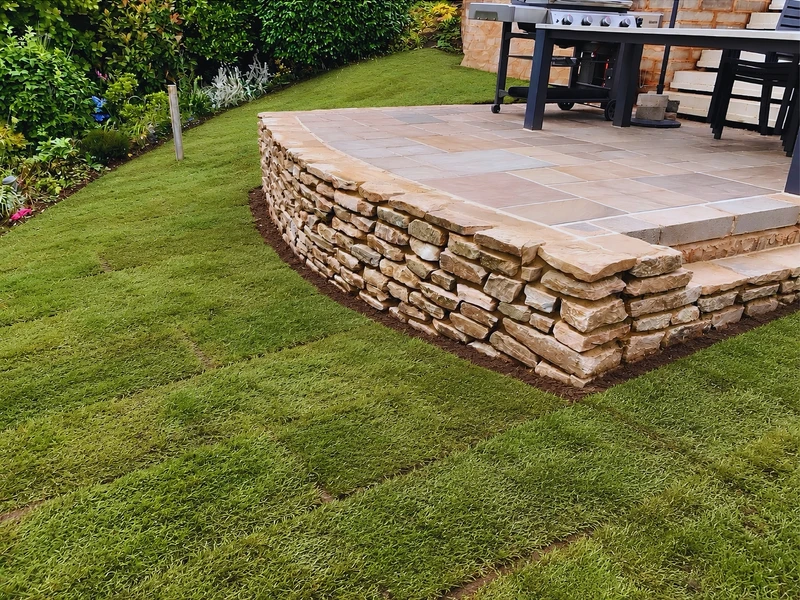
Bespoke Garden Features
Pergolas, raised beds, terracing and lawns, built to the same standard as everything underneath them.